

Sound
The classic click. Works well with headphones or in a quiet room, but on its own can become background noise that the brain learns to tune out.
 A-Tempo
A metronome born in the family
A metronome for people who actually play. Built for my daughter Iris, twelve years old and a violin.
Sound, vibration, light, screen — because every musician feels the beat in their own way.
Chapter 1
Iris started the violin at seven. Two years in, it was time to make friends with the metronome. We chose a mechanical one with a pendulum — like her grandfather's. It had charm. But the pendulum wasn't perfectly even, the ticking disappeared the moment she worked on the volume of her sound, and sometimes it bothered her more than it helped. That's when I decided to write one myself.
Chapter 2
The first prototype had two things: sound and vibration. I had Iris try it. Her reaction: "Dad, I can't feel the vibration when I play." When you play violin your body is already full of signals — strings under your fingers, the bow, the body of the instrument resonating. The phone disappears in that context. That feedback nearly killed the project. It also taught me the most important lesson: no single channel works for everyone.
Chapter 3
That Christmas we took Iris to see "Harry Potter and the Half Blood Prince in Concert" in Rome — a live orchestra performing the score while the film played overhead. On the way home she said: "Dad, the conductor was getting the tempo from a light that flashed. It was like a metronome, but made of light. So strange — and so brilliant!" That sentence unblocked the project. I added the torch flash and the screen blink. And it finally worked.
Features
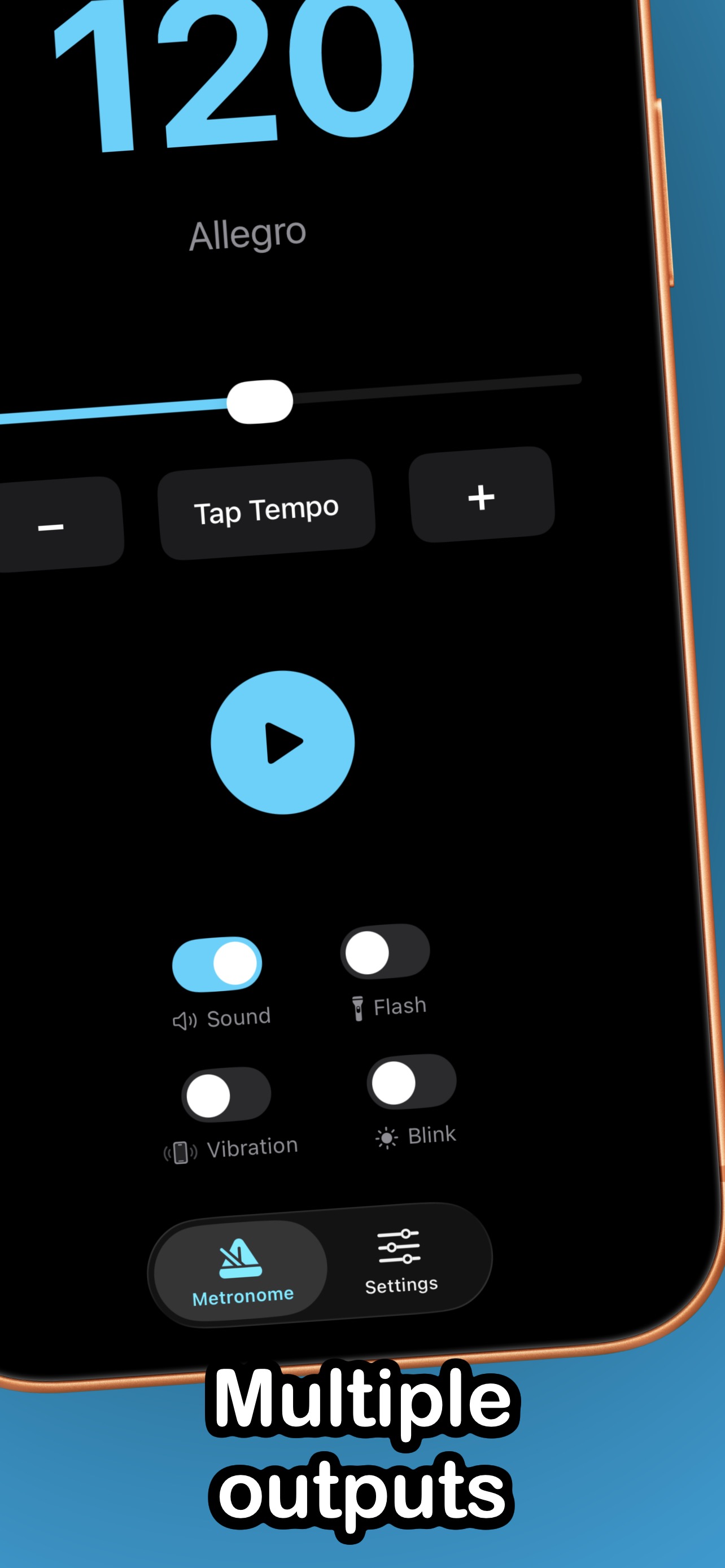
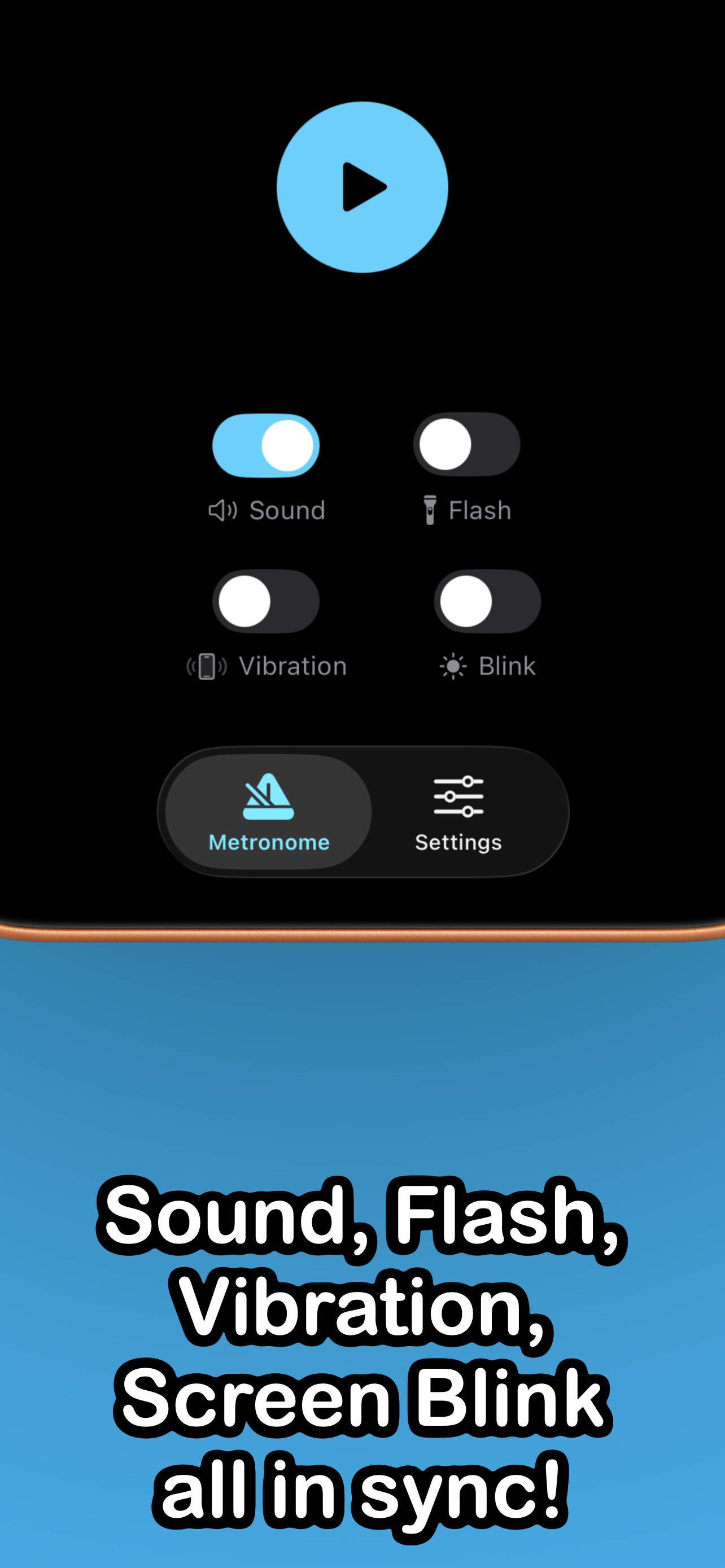
A-Tempo lets you choose how the metronome speaks. Not one way, but four — alone or in any combination. Different people, different moments, different rooms. There is no universal channel.
The classic click. Works well with headphones or in a quiet room, but on its own can become background noise that the brain learns to tune out.
The phone vibrates on every beat. Great for wind instruments, late-night practice, or when the phone is sitting on the music stand.
The phone's torch flashes on every beat. Intense and visible even in bright rooms. Hard to ignore when your hands are busy with an instrument.
The whole screen pulses softly. A discreet peripheral visual reference — no need to look away from the score.
The small things
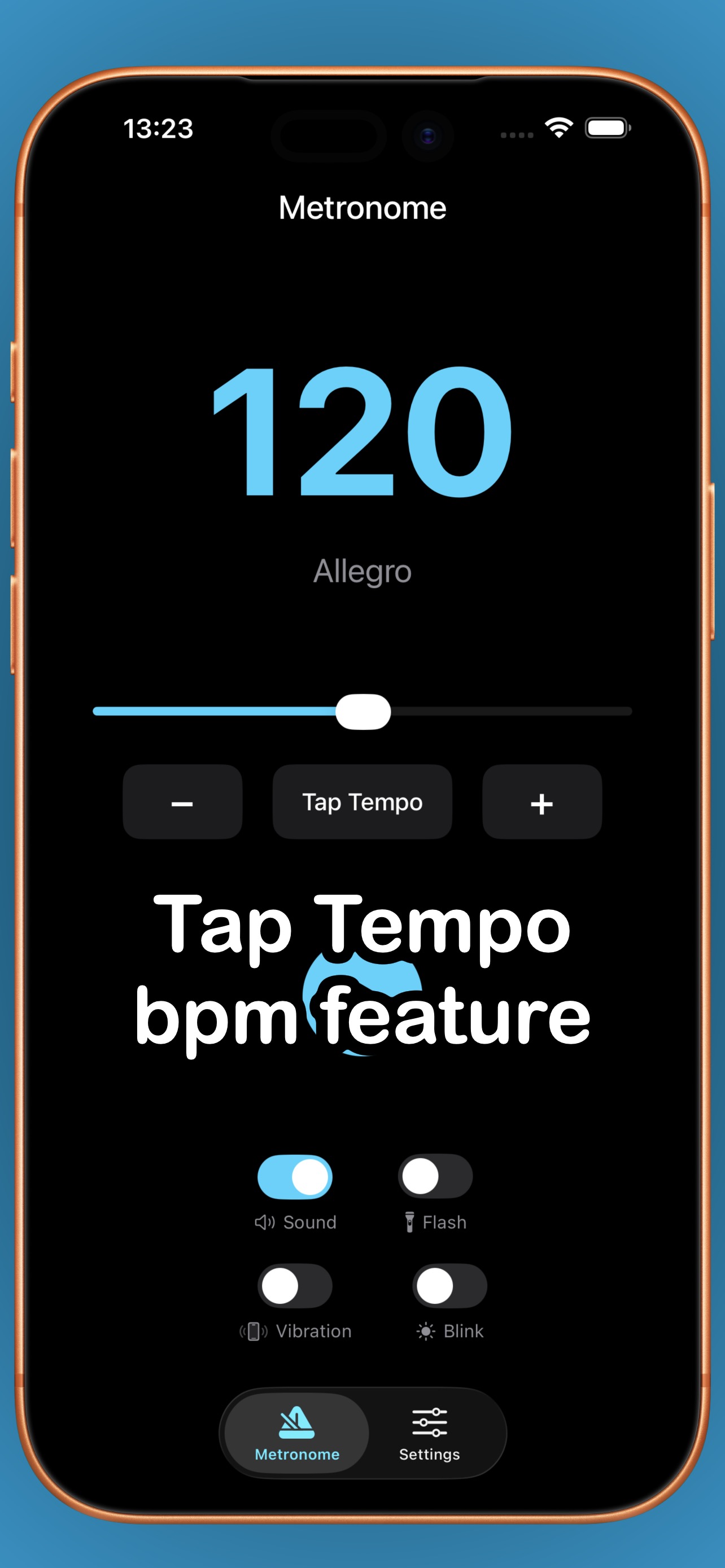
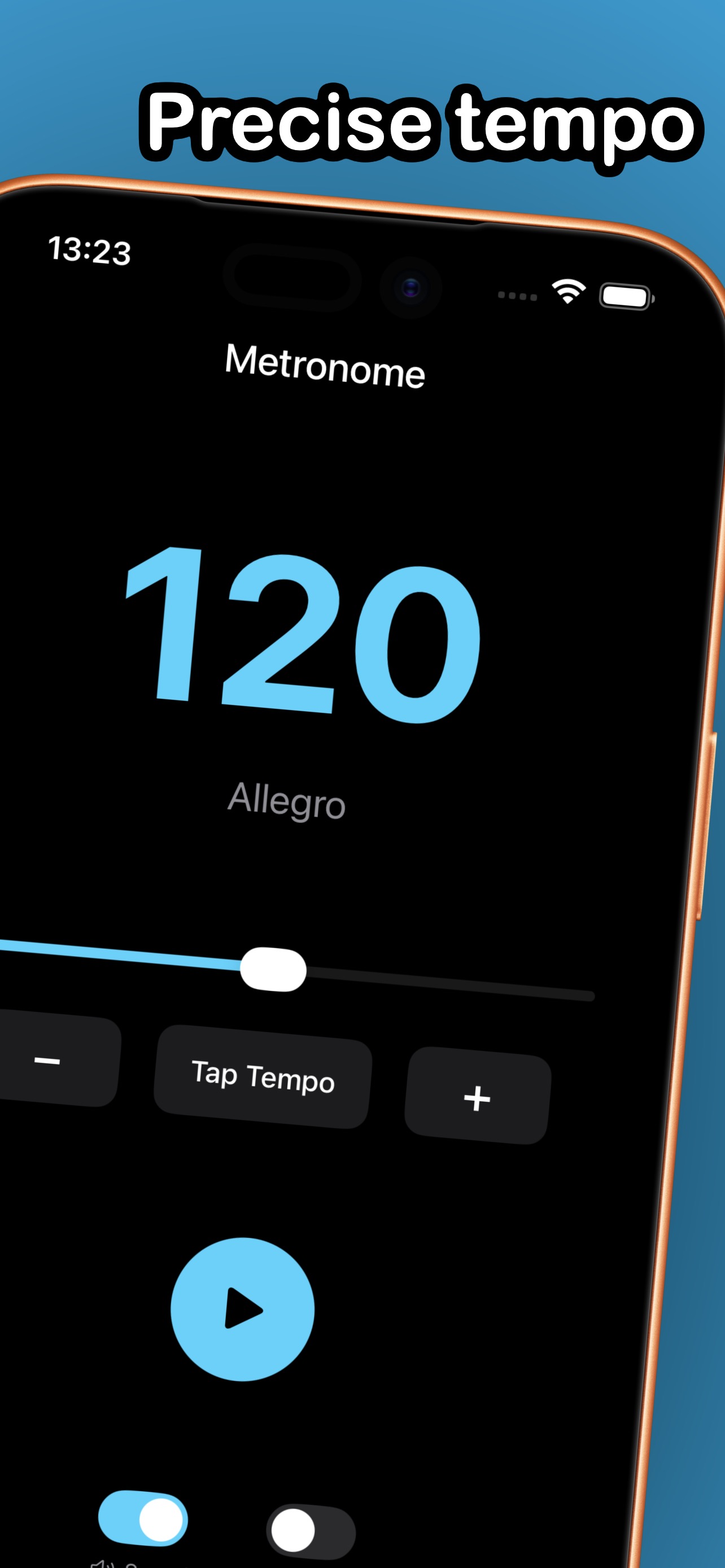
Tap the screen in rhythm and the app finds the BPM. Borrowed from my electric guitar — on guitar pedals tap tempo is everywhere. It felt natural to bring it here.
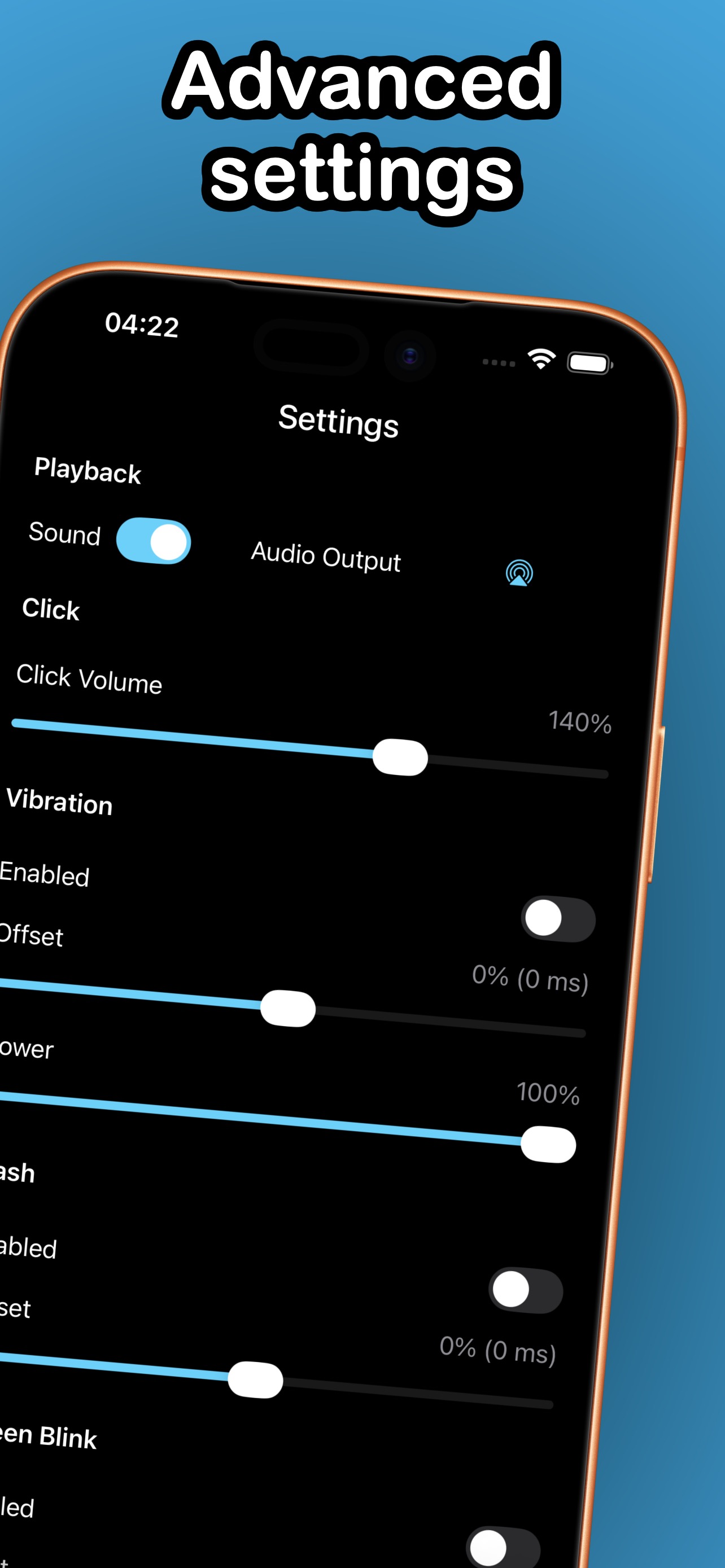
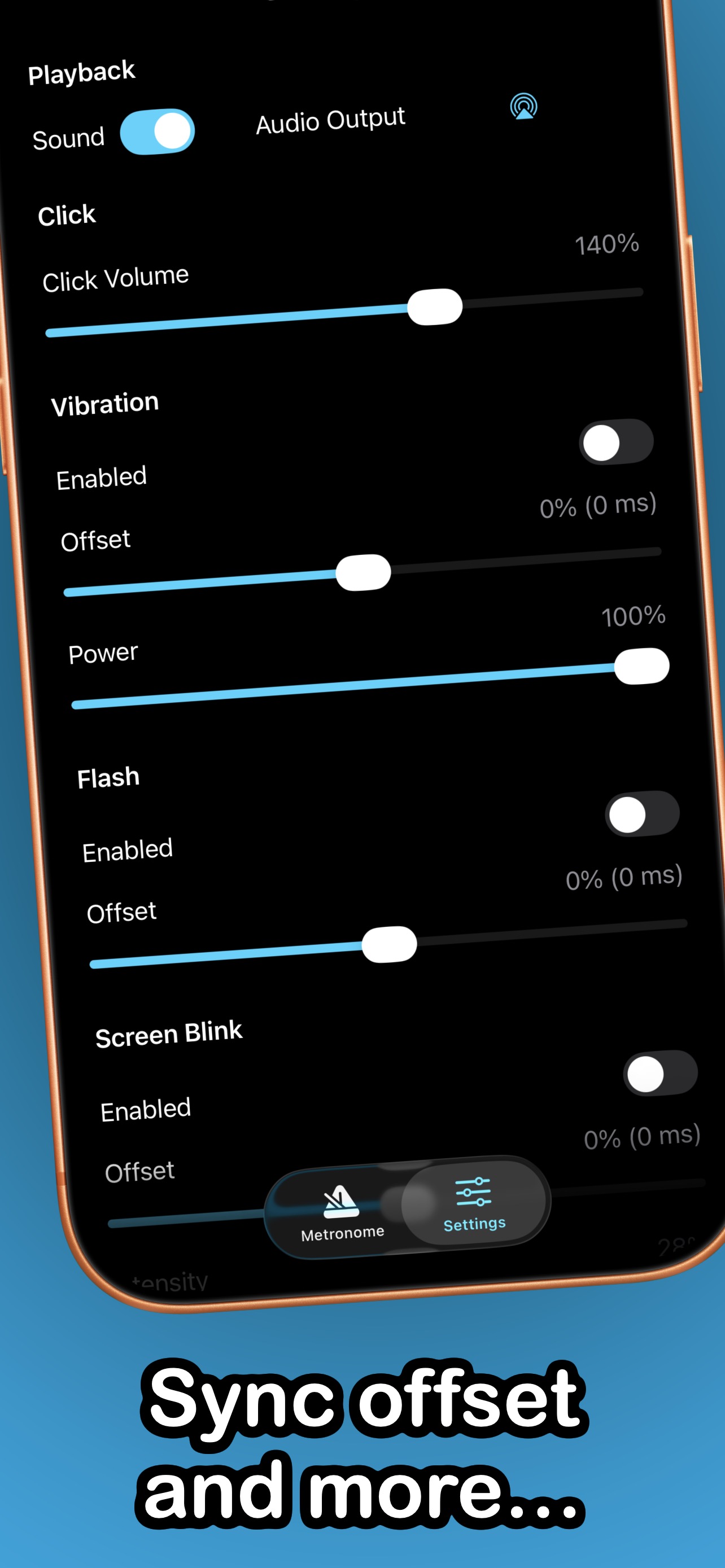
Sound, vibration and flash can arrive with different latencies. Each channel has an adjustable offset so everything lands exactly when you want it to.
No accounts, no syncing, no manual. The tool should be used during practice, not instead of practice.
Get it
Free, no accounts, no ads. Built to work even for a twelve-year-old with a violin in her hands.